
Steel forged with two thousand years of mastery.
Each katana is hand-forged, differentially hardened, and finished by a master smith. Not a replica — a blade.
Discover the collectionVisit the forgeForged, not cast
T10, 1095 & folded Damascus steel, shaped by hand.
Differential hardening
A true hamon, born from clay-tempering — never printed.
Battle-ready or display
Sharpened, balanced, full-tang. Yours to choose.
Our Katana Selection
A first look at the blades our customers rate highest.
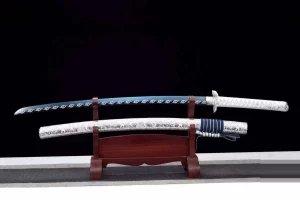
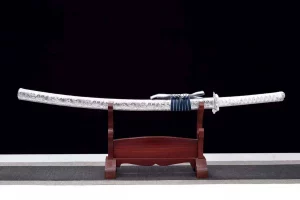
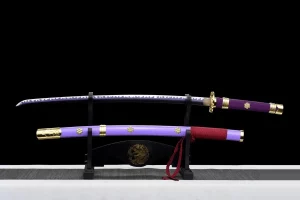
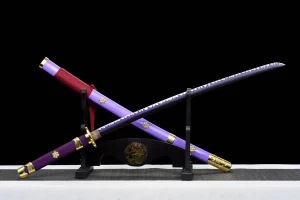
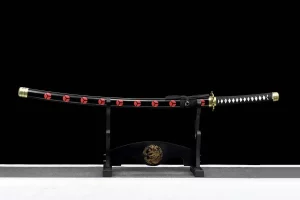
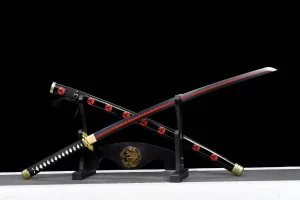
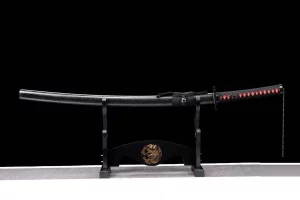
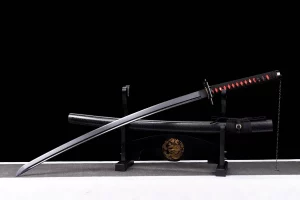
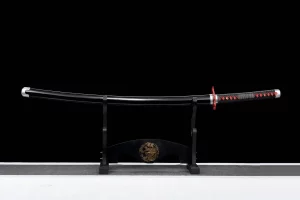
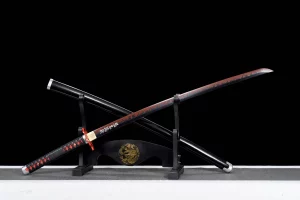
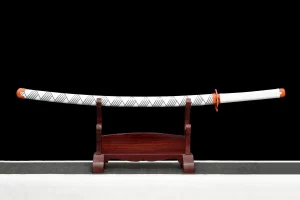
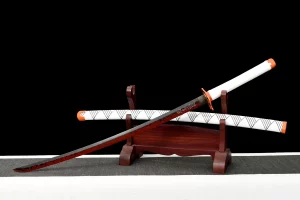
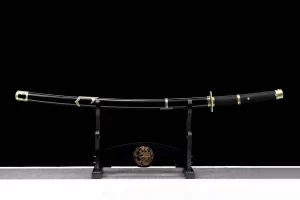
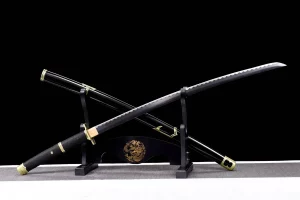
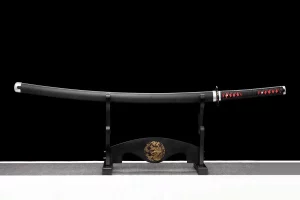
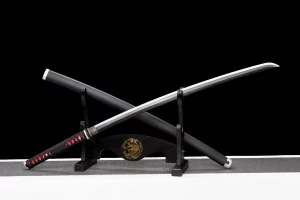
Find your sword
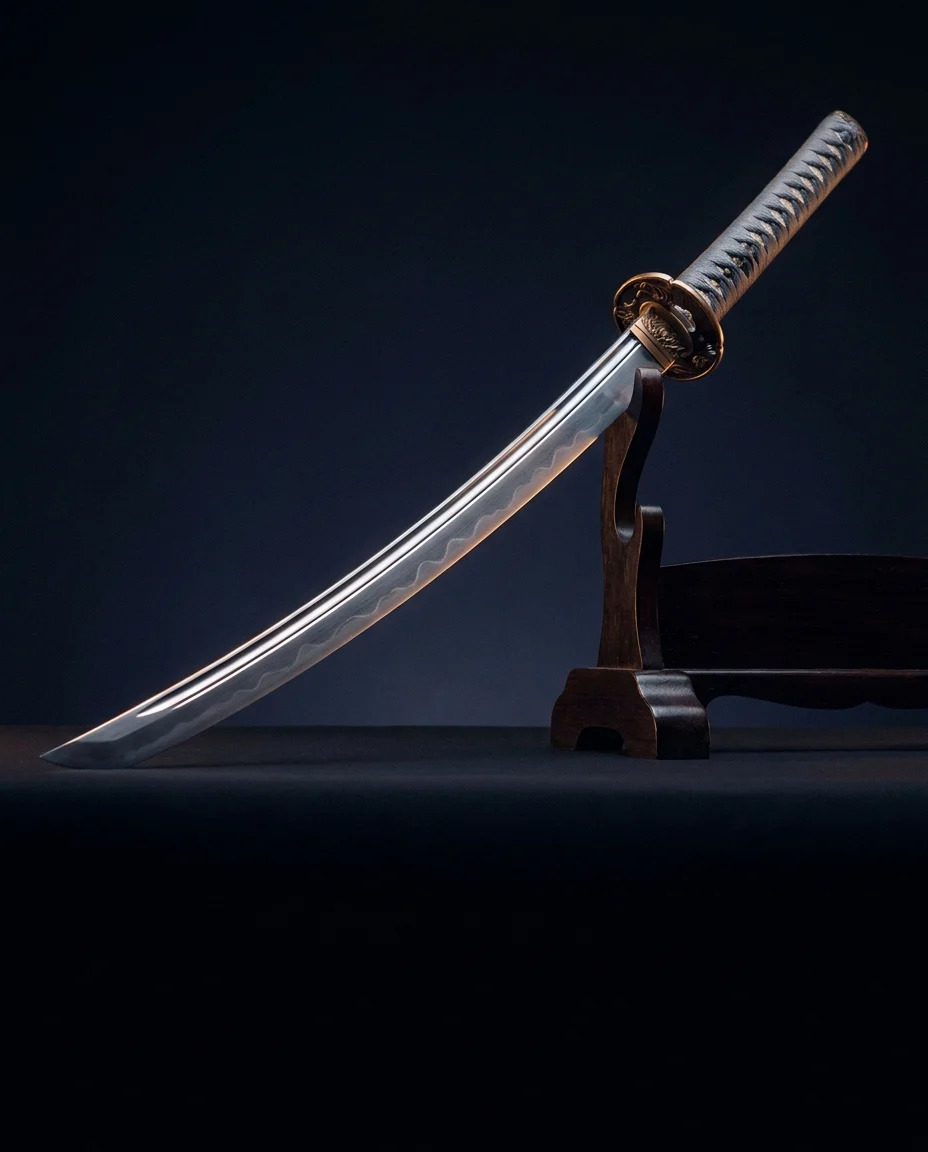
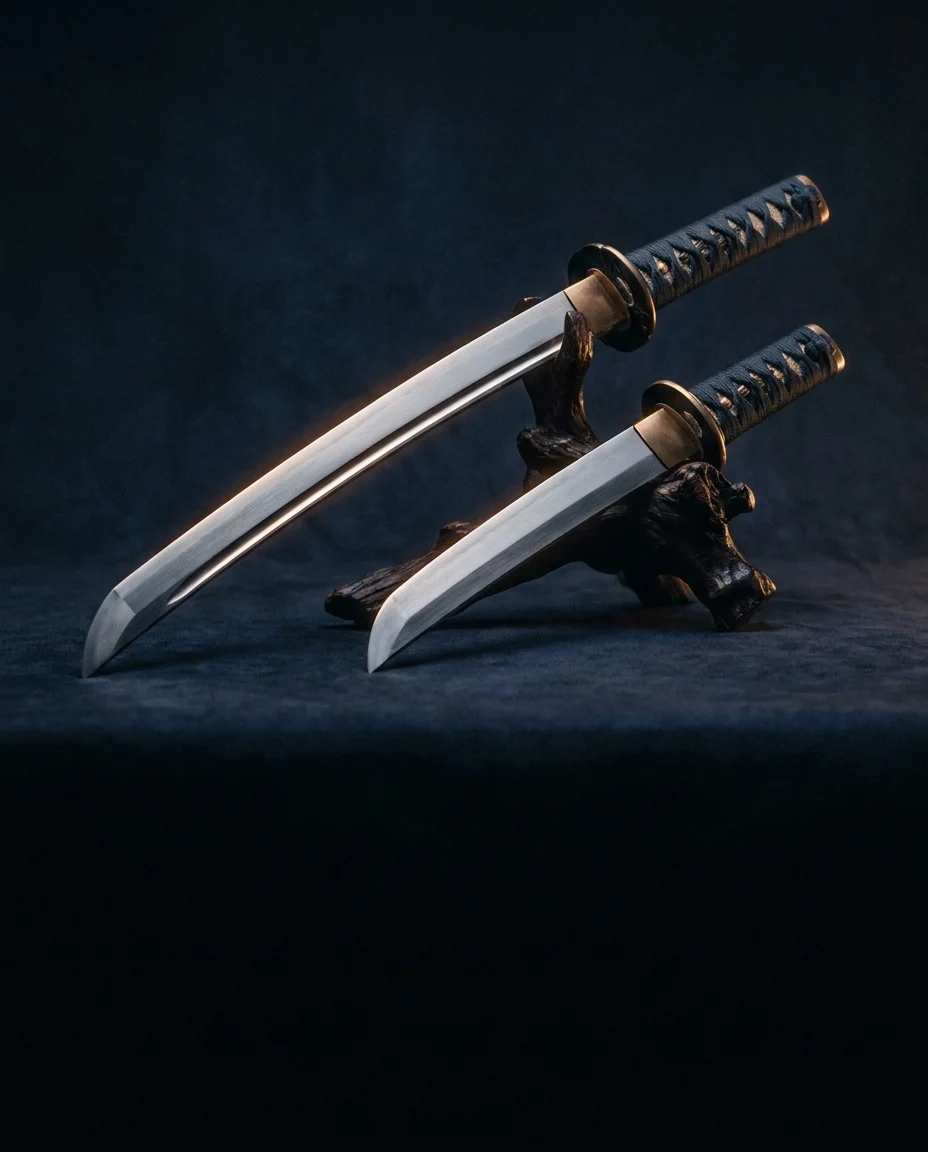
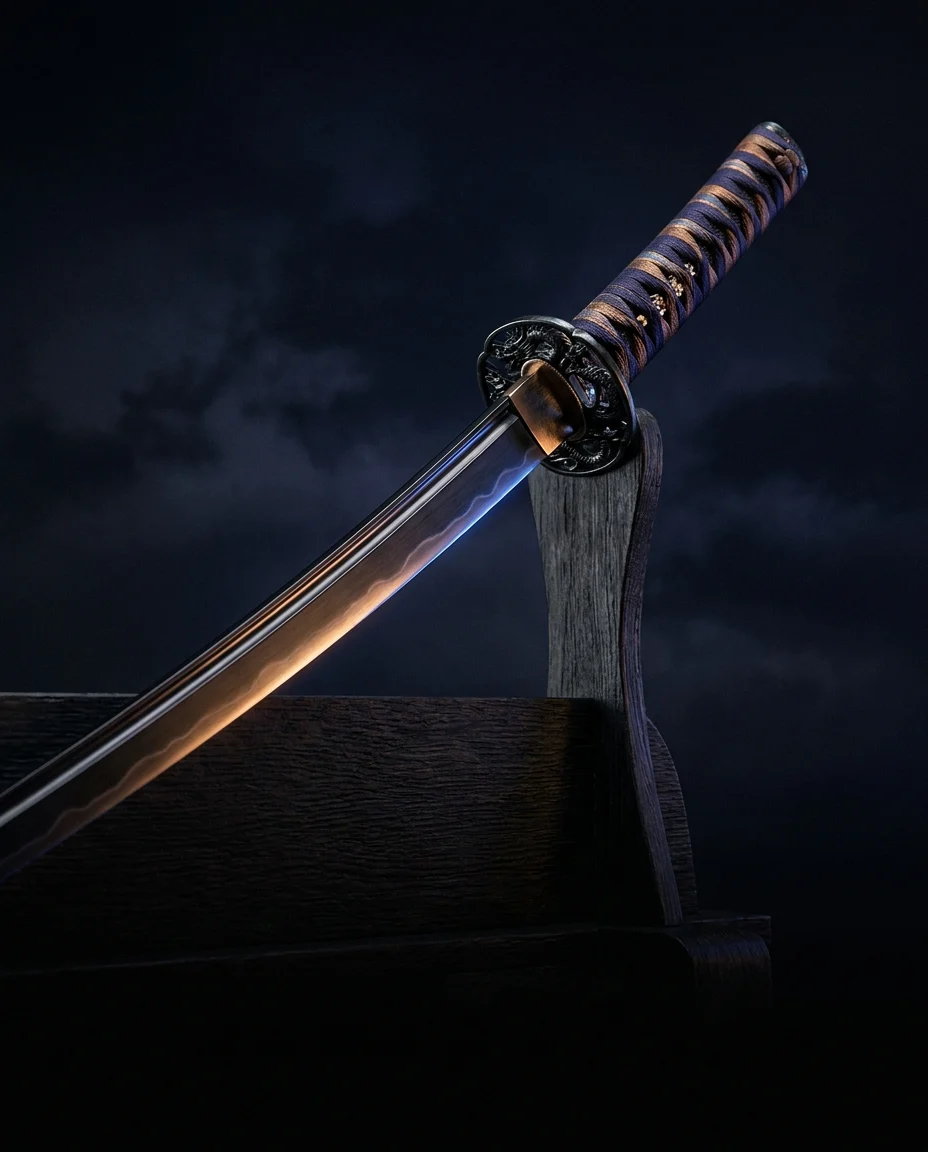
How a hand-forged katana is made
It starts as a dull bar of high-carbon steel. The smith chooses the metal for the job — springy 1095, tough T10, or folded Damascus billets that draw a living grain through the blade. That first choice decides everything that follows, the whole character of the katana sword to come; our steel guide lays out how each one behaves under the hammer and in the hand.
Then comes the heat. The bar is brought to a deep orange glow, folded and hammered again and again to drive out impurities and build the layered structure of a true Japanese sword. Shaped, it is coated in clay — thick along the spine, thin along the edge — and plunged into the quench. The two halves cool at different rates, and a hamon rises where they meet: the rippling temper line of real differential hardening, never etched or printed.
Last, the polish. Days of work on graded stones bring out the grain, sharpen the geometry, and reveal the curve. What leaves the forge is full-tang and balanced — weight where weight belongs, a point of balance a few inches above the guard, a samurai sword that answers when you move. Every part is named in our anatomy glossary, from kissaki to nakago. Battle-ready or finished for display, our how to choose guide helps you decide. Not cast. Not a replica. Browse the whole katana collection — each one forged, not cast, made the way blades have been made for centuries.
See how it's forgedThe forge's selection
The blades our craftsmen are proudest of.
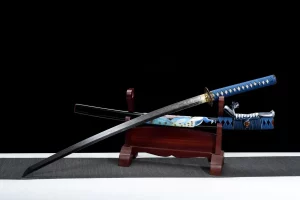
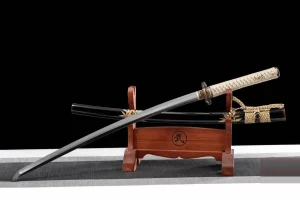
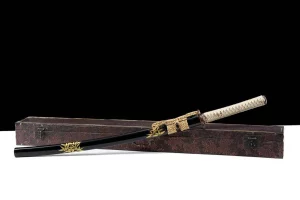
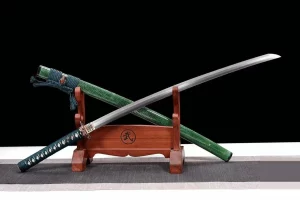
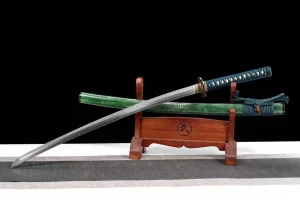
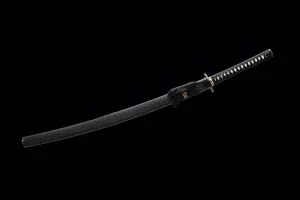
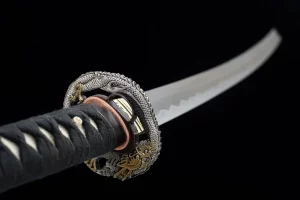
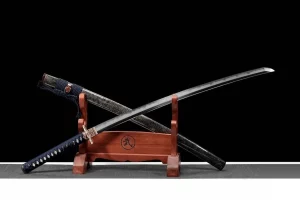
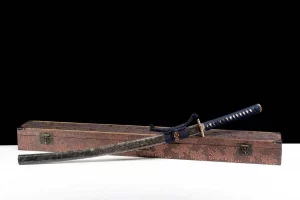
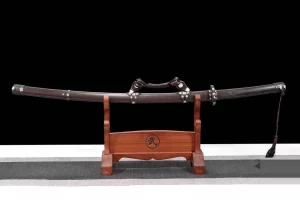
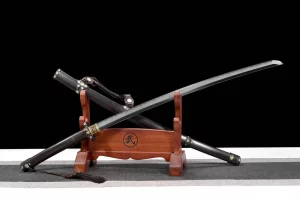
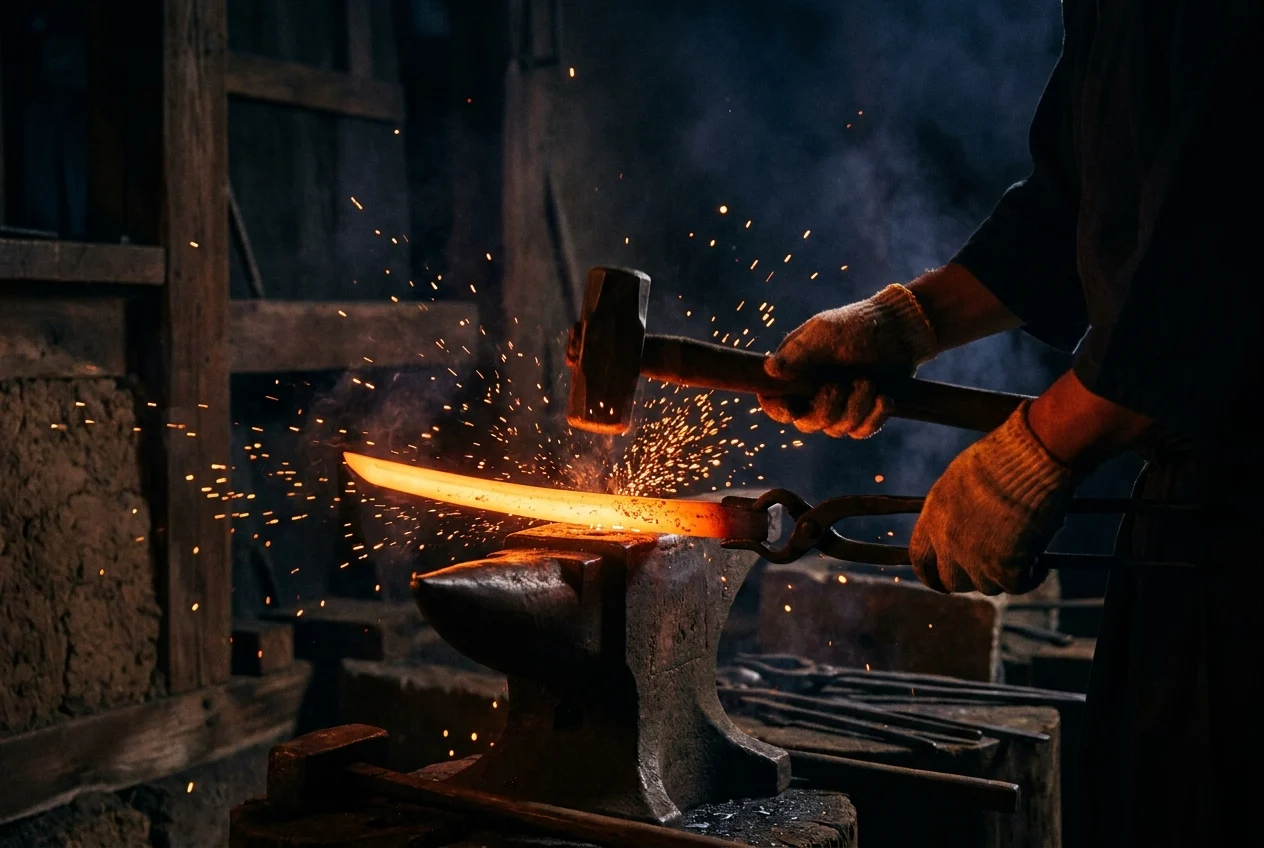
Every katana tells the story of its forging.
It begins with high-carbon steel, heated until it glows. The smith folds and hammers it, drawing out impurities and building the grain that gives a Japanese blade its soul.
Clay is laid along the spine before the final quench — and in the fire, the hamon is born: that rippling temper line no machine can fake.
Read the forging journalKatana questions, answered
What actually makes a katana a katana, and not just any curved sword?
A katana is a single-edged, curved Japanese sword built around a few non-negotiables: high-carbon steel, a gentle curve (the sori), and a tang — the nakago — that runs deep into the handle. Length sets it apart too: a blade much over 60cm is a katana, its shorter sibling the wakizashi, shorter still the tanto. But the real line is how it's made — forged and clay-tempered by hand, never stamped or cast. Every part has a name in our anatomy glossary.
Is a hand-forged katana legal to buy and own in the UK?
Yes — within the law as it stands. The UK ban on curved swords was written to stop cheap, mass-produced replicas, and it carries a recognised exemption for swords made by traditional methods of production. Every katana sword we sell is genuinely hand-forged and differentially hardened by a master smith, which is precisely the work that exemption was drawn to protect. We can't give legal advice on your circumstances, but we can tell you plainly what we make and how, so you can buy with a clear head.
How do I know your katana is a real forged blade and not a wall-hanger?
Look for the things a factory replica can't fake. Our blades are forged from high-carbon steel — T10, 1095 or folded Damascus — then differentially hardened: clay is laid thick on the spine and thin at the edge before the quench, so the edge hardens to cut while the spine stays springy, and a true hamon forms in the fire rather than a wire-brushed imitation. Each one runs full-tang, the steel unbroken through the handle — the line between a sword and an ornament. If you want to learn what to inspect, our how to choose a katana guide walks you through it.
What's the difference between a battle-ready katana and a display katana?
A display piece is built to be looked at — often blunt, lighter in the hand, sometimes lacking a heat-treated edge. A battle-ready katana is forged, hardened, sharpened and balanced to actually cut, with a full-tang construction that holds up under real force. We make both, and every product page tells you exactly which you're looking at. Choose display for the wall, battle-ready if you intend to handle or practise with the blade.
Which steel should I choose — T10, 1095 or folded Damascus?
It depends on what you want from the blade rather than which is 'best'. 1095 is a classic high-carbon steel that takes a keen, traditional edge; T10 adds tungsten for extra toughness and a touch more forgiveness; folded Damascus carries the layered grain and visible pattern prized for its beauty as much as its bite. None is a shortcut — all are forged and clay-tempered by hand. Our steel guide lays each one out side by side so you can match the steel to your purpose and budget.
Why does a hand-forged katana cost more than the swords I see online?
Because you're paying for the hours of a smith, not the speed of a machine. Folding and hammering the steel, clay-tempering the spine, hardening, polishing and fitting a blade by hand takes real time and real skill — that's what the cheaper, cast replicas leave out. We keep an honest range, from genuine forged katanas at £195 at entry level up to the smiths' finest master-grade work. The price reflects the craft in your hands, not a markup on the wall.
The Katana Spada, Forged the Traditional Way
A katana is a curved, single-edged Japanese sword carried for centuries by the samurai — and a katana sword earns the name only when it is forged, not cast. What follows is written for the way you buy: what the blade is, how it is made, which steel suits you, and how to spot a real forge. Told at the anvil, not the marketing desk.
What a katana sword actually is
The katana is defined by its gentle curve, its single hardened edge, and a long grip for two hands. Its lineage runs back two thousand years to the swordsmiths of Japan who served the samurai. The shape hides the real cleverness: a hardened cutting edge married to a softer, shock-absorbing spine. That marriage is the whole point of a Japanese sword — it lets a blade take a keen edge yet survive use, and it separates a real blade from a wall-hanger. A genuine one is built around a full tang — the nakago running unbroken through the handle — blade and grip one continuous piece of steel. The wakizashi and the tanto are forged by the same hand on a smaller scale.
How a katana is forged
It begins with a single billet of high-carbon steel, heated until it glows. The smith folds and hammers it, drawing out impurities and laying down the grain. Before the final quench, clay is painted thick along the spine and thin along the edge — the edge cools fast and turns glass-hard while the spine stays springy. In that instant the hamon is born: the rippling temper line no printer or laser can fake. A printed or etched line is cosmetic; a true hamon is the steel itself, the surest sign of differential hardening done right. Every blade we make is full-tang — one unbroken piece from kissaki to nakago. See the whole sequence in how it's forged.
Which steel is right for you
Steel is the first real decision; it sets the character of the blade. T10 is a tough tungsten alloy that takes clay-tempering beautifully and resists chipping — a sound all-rounder with a bright natural hamon. 1095 is a high-carbon steel prized for a keen, hard edge and a crisp temper line — the traditional workhorse. Folded Damascus is folded many times, leaving that flowing grain across the face. None is simply 'best'; each suits a different hand. Our steel guide walks through each one honestly, and how to choose lays the decision out plainly.
Battle-ready or display
A battle-ready katana is sharpened, properly balanced, differentially hardened and full-tang — built to be drawn and used for cutting practice on tatami or bamboo. A display piece is forged to be looked at: handsome on a stand, but not meant to meet a target. Both are real blades from the same fire; only the purpose differs. Many start with a beginner katana, step up to a mid-range katana as the cutting improves, and reach for a master-grade katana.
Is it legal in the UK
A fair question, and a common one. UK law restricts the sale of cheap, mass-produced curved swords — the replicas turned out by the thousand. Genuine hand-forged swords made using traditional methods of production fall under the recognised exemption to that ban, because they are made the old way rather than stamped out. Every katana sword we forge is made by hand using those methods. We can tell you exactly how a blade is made, but we cannot give legal advice; if your situation is unusual, check the current regulations for yourself before buying.
Where to buy a real katana — and how to keep it
The market is full of decorative blades dressed up as the genuine article. Buying from an actual forge means the steel, the differential hardening and the construction are what the listing claims. We forge each blade by hand with master smiths; our story tells you who stands behind it. Care is simple: a high-carbon blade rusts if neglected, so keep it dry, wipe the ha after handling, oil it lightly, and store it edge-up in its saya — our care guide covers the routine. The full range of katana is there — every one forged, never cast.